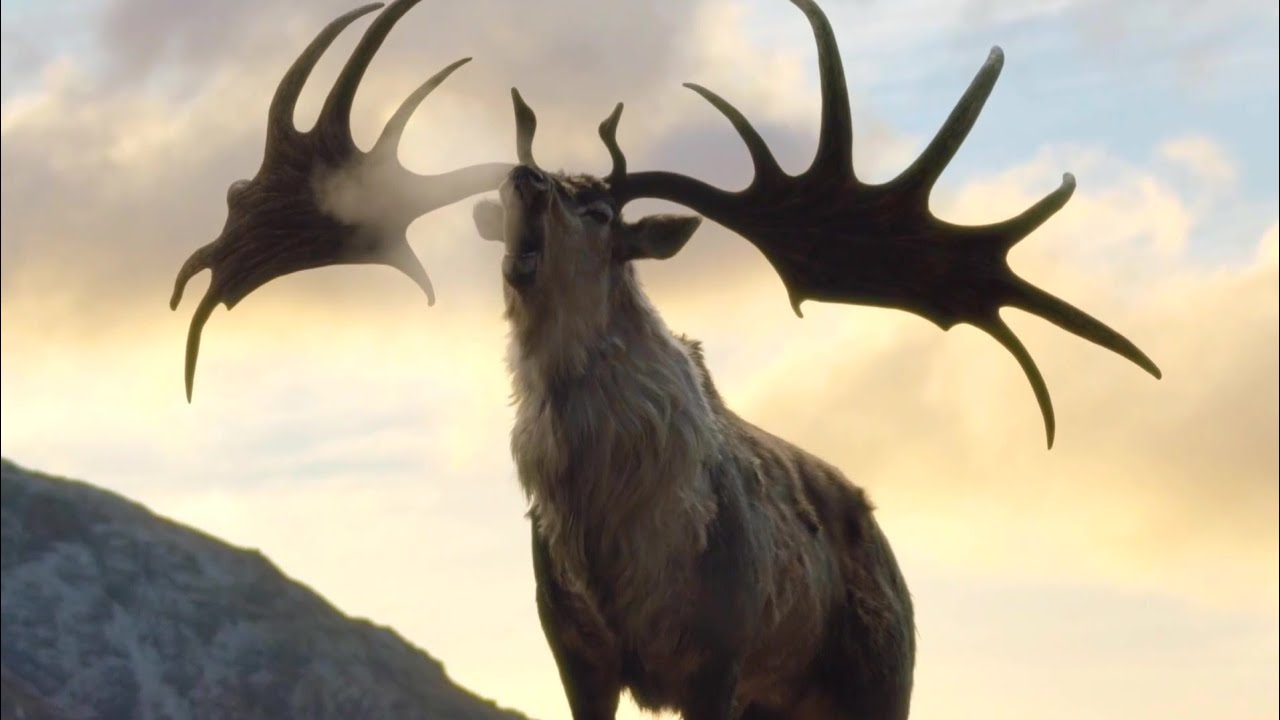
Megaloceros, commonly known as the Giant Deer or Irish Elk, was a large species of prehistoric deer that lived during the Pleistocene Epoch, approximately 400,000–7,700 years ago. Despite its common name "Irish Elk," it was neither an elk nor restricted to Ireland; it was a true deer that lived across Europe and parts of Asia.
The most famous species, Megaloceros giganteus, was one of the largest deer that ever existed. It stood around 2 meters (6.5 feet) tall at the shoulder and could weigh up to 700 kilograms. Its most remarkable feature was its enormous antlers, which could span up to 3.5 meters (11.5 feet) from tip to tip and were likely used for displays and competition between males.
Megaloceros was a herbivore that fed on grasses, leaves, shrubs, and other vegetation. Its large body and wide antlers were adaptations for open environments such as grasslands and tundra regions that existed during Ice Age periods.
The extinction of Megaloceros is still debated, with possible causes including climate change, habitat loss, and pressure from human hunting. The last populations survived into the early Holocene Epoch, making it one of the most recent large prehistoric mammals to disappear.
Megaloceros
Megaloceros was a giant prehistoric deer from the Pleistocene known for its enormous antlers, with some of the largest ever seen in any deer.