Gastonia was a medium-sized ankylosaur dinosaur that lived during the Early Cretaceous Period, approximately 125–122 million years ago. It was discovered in the western United States, particularly in Utah, where its fossils were found in the Cedar Mountain Formation.
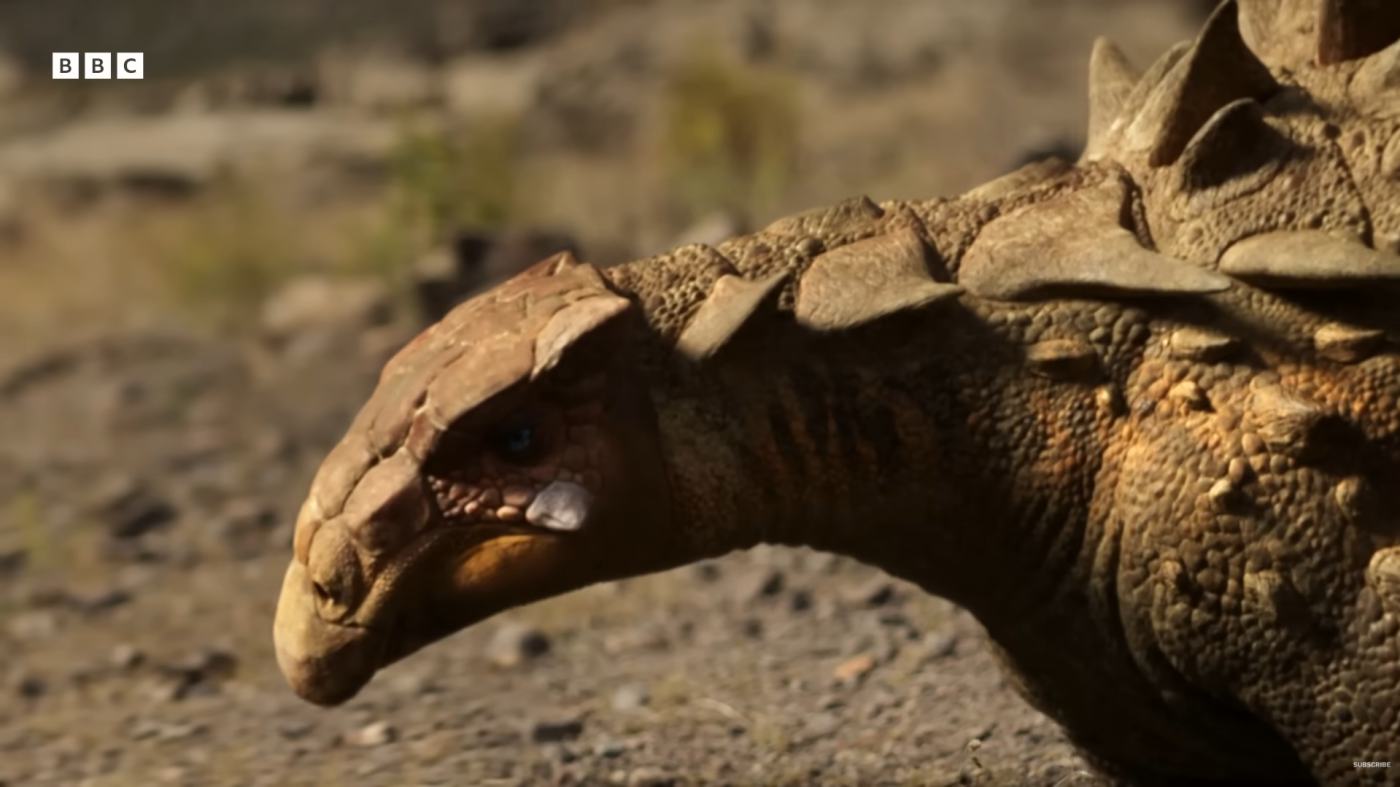
Gastonia belonged to the group Nodosauridae, a type of armored dinosaur closely related to ankylosaurs. Unlike later ankylosaurs that often had tail clubs, Gastonia lacked a clubbed tail and instead relied on extensive body armor and large spikes along its shoulders and sides for protection against predators.
Its body was covered with rows of bony plates called osteoderms, which formed a protective shield over its back, neck, and flanks. Large spikes around its shoulders and neck may have helped defend it from attacks by large predators such as Utahraptor, which lived in the same environment.
Gastonia was a low-slung, four-legged herbivore with a broad body and a small head. It likely fed on low-growing vegetation such as ferns, cycads, and other plants. It reached approximately 4.5–6 meters (15–20 feet) in length and weighed around 1–2 tonnes.
Gastonia
Gastonia was a heavily armored herbivorous ankylosaur dinosaur from the Early Cretaceous known for its large shoulder spikes and defensive body armor.