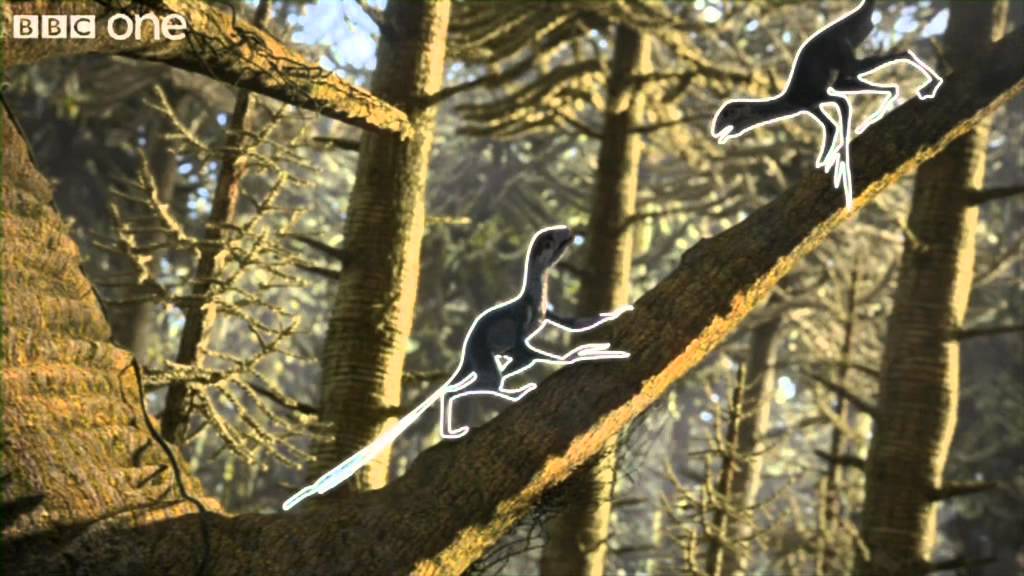
Epidexipteryx was a small, feathered maniraptoran theropod dinosaur that lived during the Late Jurassic Period, approximately 160–152 million years ago. It was discovered in the Daohugou fossil beds of Inner Mongolia, China, and is considered an important species for understanding the evolution of feathers and early bird-like dinosaurs.
Epidexipteryx had a small body, short snout, large eyes, and relatively long hind limbs. Unlike many feathered dinosaurs that used feathers for flight or insulation, Epidexipteryx possessed four long, ribbon-like tail feathers that were likely used for display rather than flying. These ornamental feathers may have helped attract mates or communicate with other members of its species.
Its forelimbs were covered with simpler feathers, but it lacked the broad wings and flight adaptations seen in later birds. It had a toothless front portion of the jaw and several unusual teeth toward the back of the mouth, suggesting it may have had a specialized diet that could have included small animals or insects.
At only around 25 centimeters (10 inches) long excluding its tail feathers, Epidexipteryx was a very small dinosaur. Its discovery provided evidence that complex feathers and bird-like features evolved in dinosaurs before true flight appeared.
Epidexipteryx
Epidexipteryx was a small feathered dinosaur from the Late Jurassic known for its decorative tail feathers and bird-like appearance.