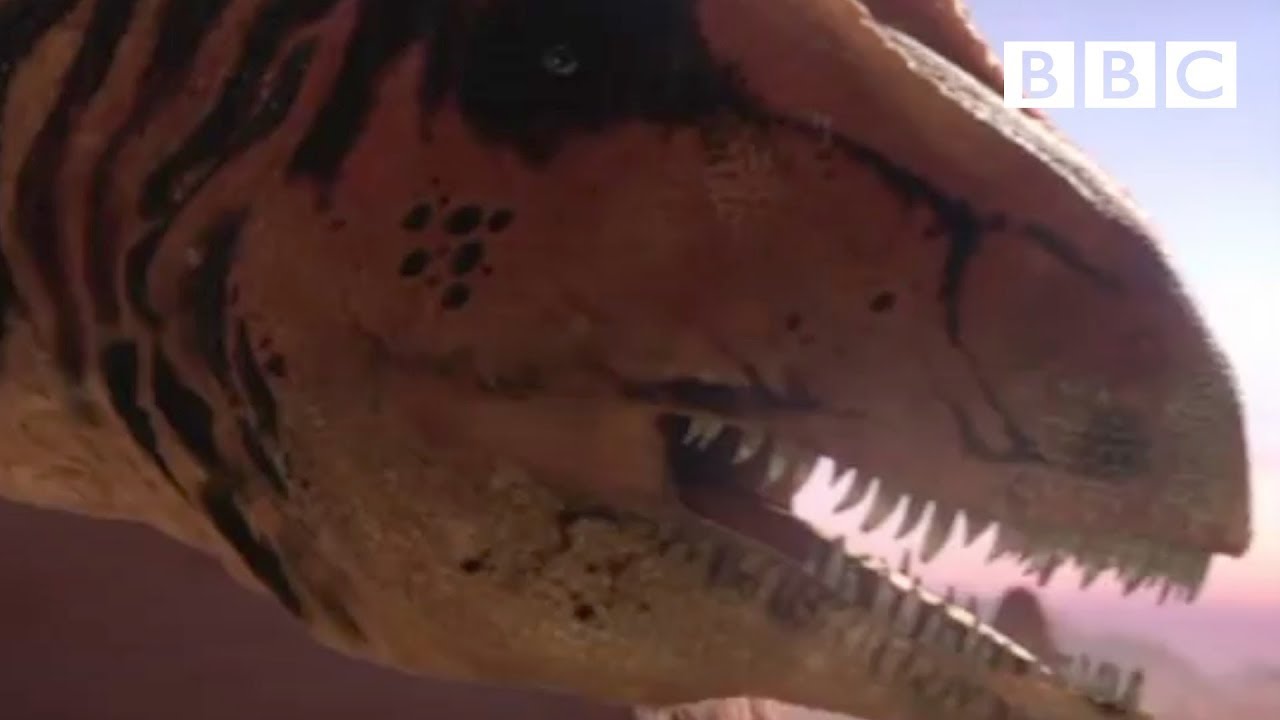
Allosaurus was a large carnivorous dinosaur that lived during the Late Jurassic, approximately 155 to 145 million years ago. It belonged to the family Allosauridae and was one of the most successful and widespread predators of the Jurassic Period. Long before the appearance of Tyrannosaurus rex, Allosaurus occupied the role of apex predator across much of western North America.
Adults typically measured 8.5 to 10 meters (28–33 feet) in length and weighed between 1.5 and 2.5 metric tons, although some exceptionally large individuals may have exceeded these estimates. It walked on two powerful hind legs and balanced its body with a long muscular tail. Its large skull was equipped with dozens of sharp, serrated teeth that were ideal for slicing through flesh. Unlike the bone-crushing bite of Tyrannosaurus rex, Allosaurus relied on slashing attacks and repeated bites to weaken its prey.
One of Allosaurus' distinguishing features was the pair of small bony crests located above its eyes. These crests may have been used for display, species recognition, or attracting mates. Its forelimbs were relatively short but strong and ended in three large, curved claws that could grasp struggling prey.
Allosaurus inhabited floodplains, forests, and river valleys across what is now western North America, particularly within the famous Morrison Formation. It shared its environment with many of the largest dinosaurs ever to exist, including Stegosaurus, Diplodocus, Apatosaurus, Brachiosaurus, and Camarasaurus. Fossil evidence suggests that Allosaurus hunted both large and medium-sized herbivores and may also have scavenged carcasses when the opportunity arose.
Hundreds of Allosaurus fossils have been discovered, making it one of the best-known large theropods. One of the most important fossil sites is the Cleveland-Lloyd Dinosaur Quarry in Utah, where the remains of dozens of Allosaurus individuals have been uncovered. The unusual concentration of fossils has led scientists to propose several explanations, including predator traps, drought events, or seasonal feeding areas.
The first Allosaurus fossils were discovered in 1877 during the famous Bone Wars, and the dinosaur was formally named by paleontologist Othniel Charles Marsh. Since then, extensive fossil discoveries have provided valuable information about its anatomy, growth, hunting behavior, and role within Jurassic ecosystems.
Allosaurus became extinct around 145 million years ago at the end of the Jurassic Period, long before the extinction of the non-avian dinosaurs. Today, it remains one of the most iconic Jurassic predators and is considered one of the best-understood large carnivorous dinosaurs.
Allosaurus
A large carnivorous dinosaur that dominated North America during the Late Jurassic and was one of the apex predators of its time.