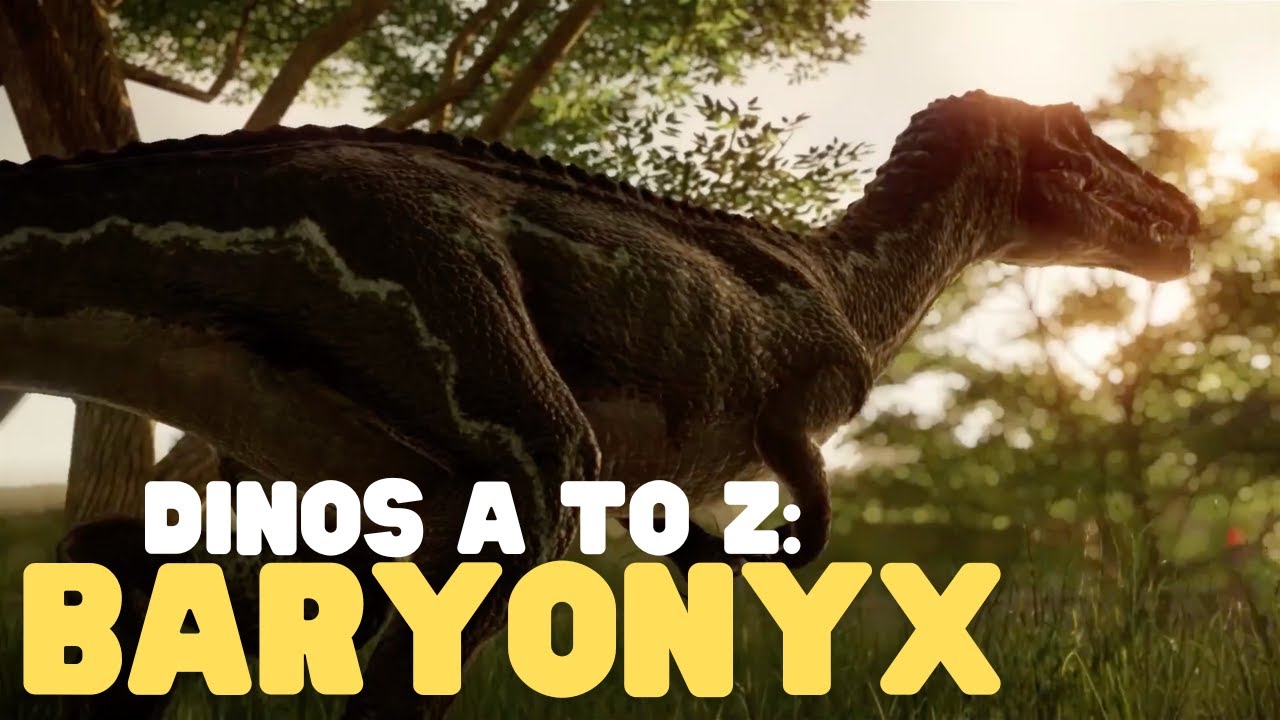
Baryonyx was a large spinosaurid theropod dinosaur that lived during the Early Cretaceous Period, approximately 130–125 million years ago. It was discovered in England, with fossils found in the Weald Clay Formation, making it one of the best-known theropods from Europe.
Baryonyx had a long, narrow skull filled with conical teeth, resembling that of a crocodile. This skull shape was adapted for catching fish, and fossil evidence suggests that fish were an important part of its diet. It also may have hunted small dinosaurs and scavenged when opportunities arose.
Its most distinctive feature was the enormous curved claw on its first finger, which measured around 30 centimeters (12 inches) long. This claw may have been used for catching prey, tearing flesh, or defense.
Baryonyx reached an estimated length of around 7.5–10 meters (25–33 feet) and had a long tail, powerful hind legs, and strong arms. Like other spinosaurids, it likely spent significant time near rivers and wetlands.
Baryonyx was an important discovery because it provided early evidence that some theropod dinosaurs had specialized diets and lifestyles different from typical land-based predators.
Baryonyx
Baryonyx was a fish-eating spinosaurid theropod dinosaur from the Early Cretaceous known for its long crocodile-like skull and large thumb claw.