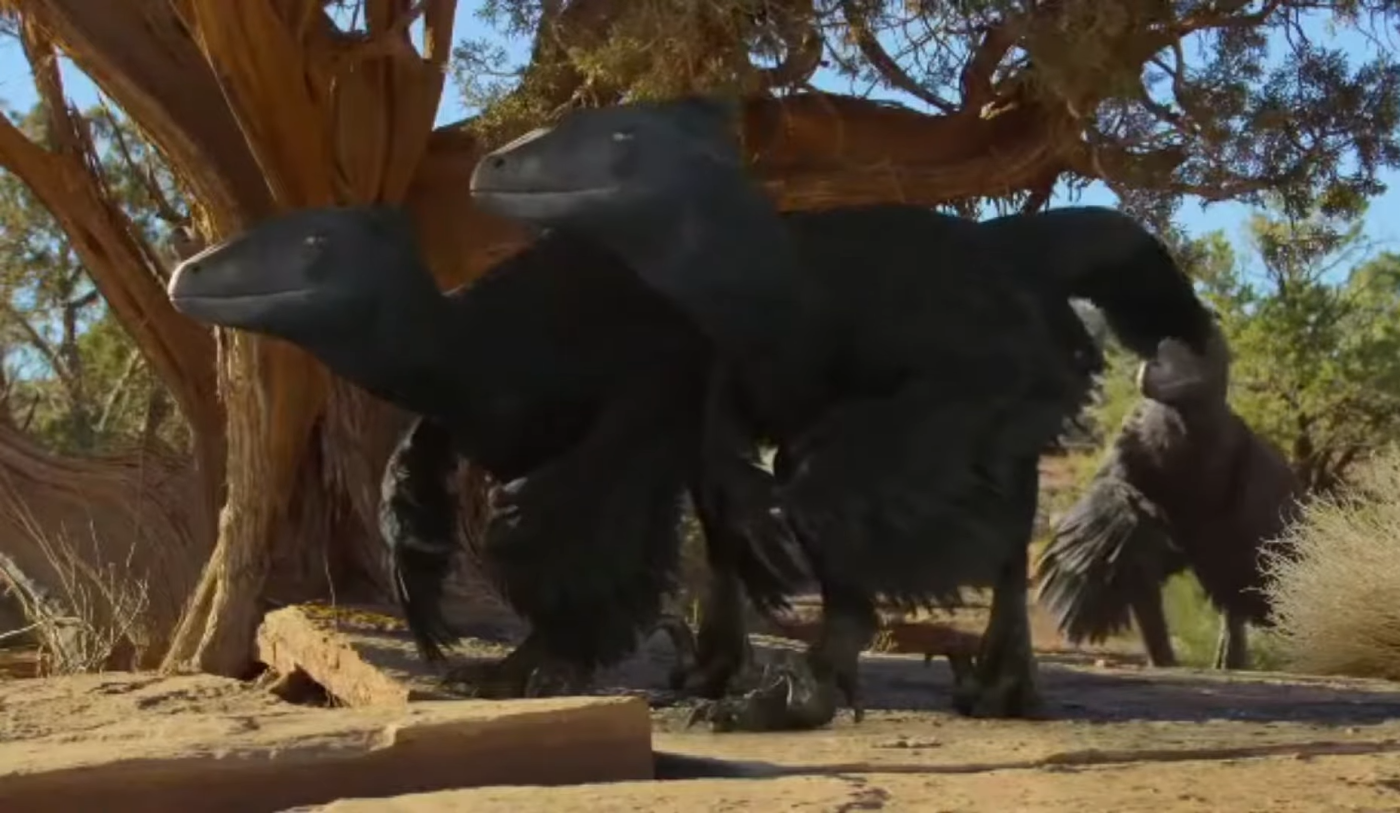
Deinonychus was a medium-sized dromaeosaurid theropod dinosaur that lived during the Early Cretaceous Period, approximately 115–108 million years ago. It was discovered in the western United States, particularly in Montana, Wyoming, and Utah, where its fossils were found in the Cloverly Formation.
Deinonychus was a close relative of birds and belonged to the same group of dinosaurs that included Velociraptor. It had a lightweight body, long tail, powerful hind legs, and a large curved sickle claw on the second toe of each foot. This claw was likely used to grip prey and deliver powerful strikes.
Reaching around 3–3.4 meters (10–11 feet) in length and weighing approximately 70–100 kilograms, Deinonychus was a highly agile predator. Its long arms ended in three clawed fingers, which may have helped it hold onto prey.
Fossil evidence suggests that Deinonychus may have hunted larger dinosaurs such as Tenontosaurus, possibly working in groups. Its discovery in the 1960s helped revolutionize dinosaur science by showing that dinosaurs were active, agile animals rather than slow reptiles, contributing to the modern understanding of dinosaurs as bird relatives.
Deinonychus
Deinonychus was a fast, feathered dromaeosaurid dinosaur from the Early Cretaceous known for its large sickle claw and hunting abilities.