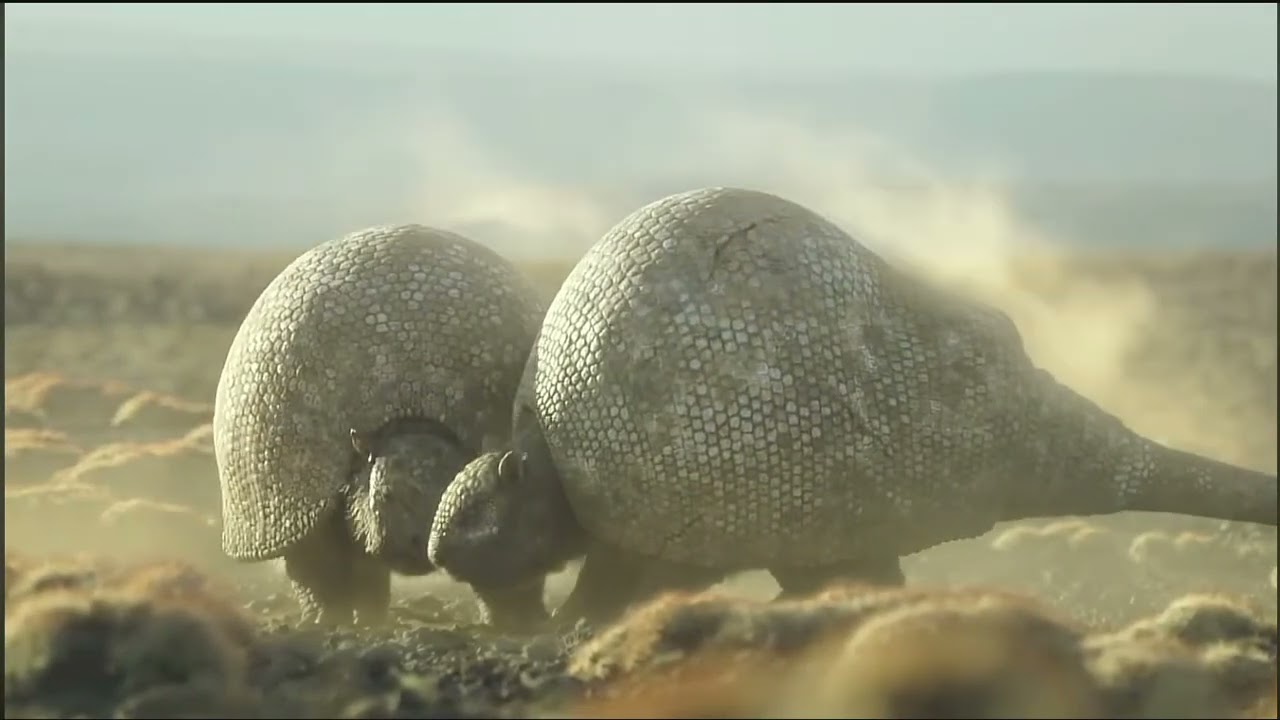
Doedicurus was a large glyptodont (a group of giant armored relatives of modern armadillos) that lived during the Pleistocene Epoch, approximately 2.5 million–8,000 years ago. It inhabited South America, where it was one of the largest and most heavily armored mammals of the Ice Age.
Doedicurus had a huge, rounded body covered by a thick shell made of fused bony plates called osteoderms. This armor protected it from predators such as Smilodon and other large carnivores. It had a short, powerful tail ending in a heavy bony club, which may have been used for defense or fighting with other individuals.
Reaching lengths of around 3–4 meters (10–13 feet) and weighing up to 1.5 tonnes, Doedicurus was comparable in size to a small car. It was a herbivore that fed on grasses, leaves, and other vegetation, using its strong jaws and specialized teeth to process tough plant material.
Doedicurus disappeared near the end of the Pleistocene, likely due to a combination of climate changes and pressure from early human hunting. Its fossils provide important information about the diversity of giant mammals that lived during the Ice Age.
Doedicurus
Doedicurus was a giant armored prehistoric mammal from the Pleistocene known for its massive body, bony shell, and club-like tail.