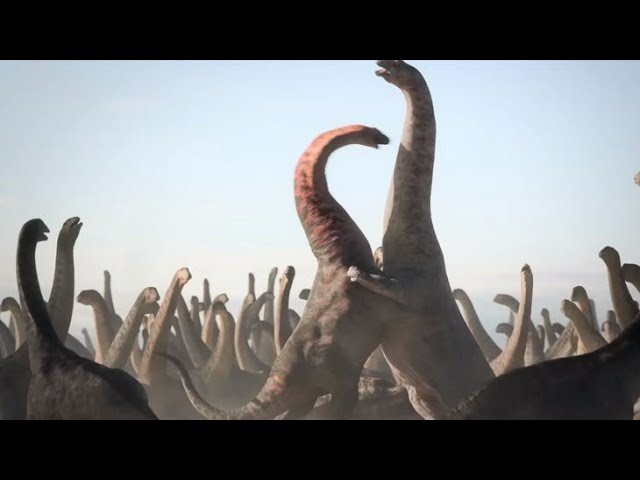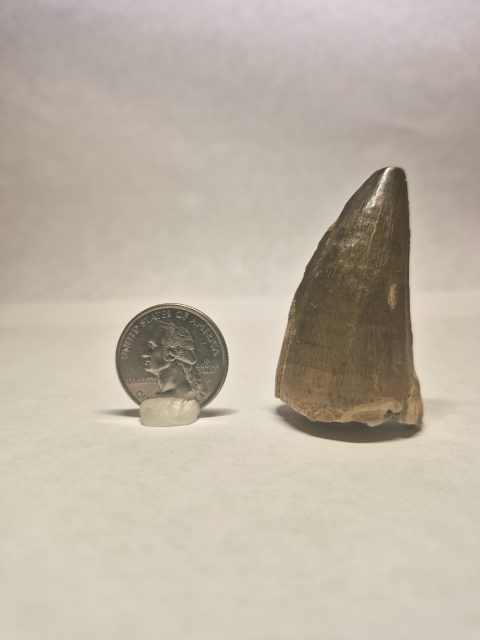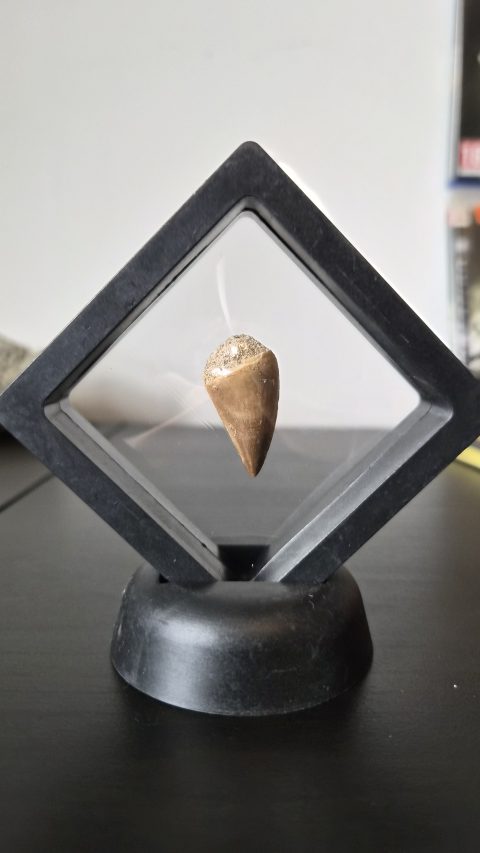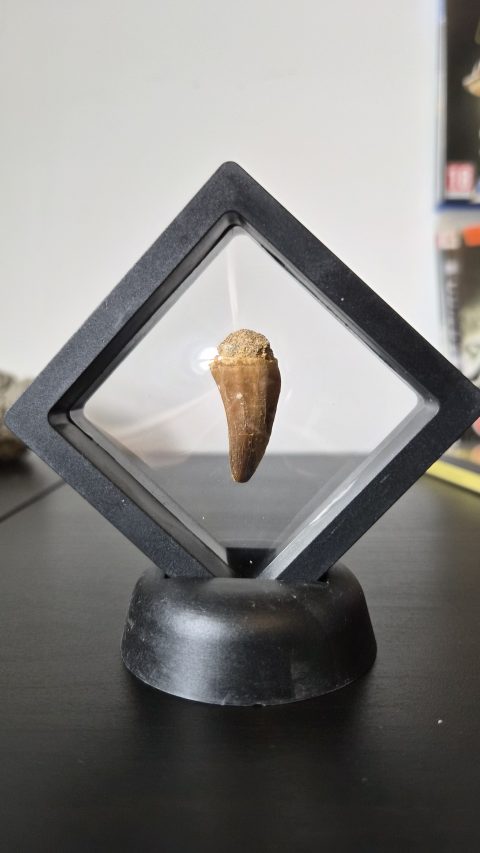
Dreadnoughtus was a gigantic herbivorous dinosaur that lived during the Late Cretaceous, approximately 77 to 75 million years ago. It belonged to the group Titanosauria, the last major lineage of sauropod dinosaurs. Named after the word dreadnought, meaning "fears nothing," Dreadnoughtus earned its name because its immense size would have made healthy adults virtually immune to attack by most predators.
Adults measured approximately 26 to 28 meters (85–92 feet) in length and are estimated to have weighed between 50 and 65 metric tons, making Dreadnoughtus one of the largest land animals ever known. It possessed a long neck for reaching vegetation high above the ground, a relatively small head with peg-like teeth, a massive barrel-shaped body, four pillar-like legs, and an exceptionally long tail that helped balance its enormous weight.
Dreadnoughtus inhabited the floodplains and forests of what is now Patagonia, Argentina, during the Late Cretaceous. The region supported lush vegetation, including conifers, ferns, cycads, and flowering plants, providing abundant food for these giant herbivores. Like other titanosaurs, Dreadnoughtus likely spent much of its day feeding, consuming hundreds of kilograms of vegetation to sustain its massive body.
Although its immense size offered significant protection, juvenile Dreadnoughtus would have been vulnerable to large predators. Adult individuals, however, were probably too large for most carnivorous dinosaurs to attack successfully. Fossils found alongside other titanosaurs suggest that these giant herbivores shared their environment with predators such as Megaraptor and Abelisaurid theropods.
The first Dreadnoughtus fossils were discovered in southern Argentina and were formally described in 2014. The species, Dreadnoughtus schrani, is represented by one of the most complete giant titanosaur skeletons ever found, preserving around 70% of the bones from behind the skull. This remarkable completeness has allowed scientists to estimate its size and anatomy more accurately than many other enormous sauropods.
Studies of the fossil bones indicate that the discovered individual was still growing at the time of its death, meaning fully mature adults may have reached even larger sizes. This finding highlights the extraordinary growth potential of titanosaurs and provides valuable insight into how the largest terrestrial animals evolved.
Dreadnoughtus became extinct approximately 66 million years ago during the Cretaceous–Paleogene (K–Pg) mass extinction, which eliminated all non-avian dinosaurs. Today, it stands as one of the best-known giant titanosaurs and remains an important species for understanding the biology, growth, and evolution of Earth's largest land animals.
Dreadnoughtus
A colossal long-necked herbivorous dinosaur from the Late Cretaceous of South America, considered one of the largest land animals ever discovered.