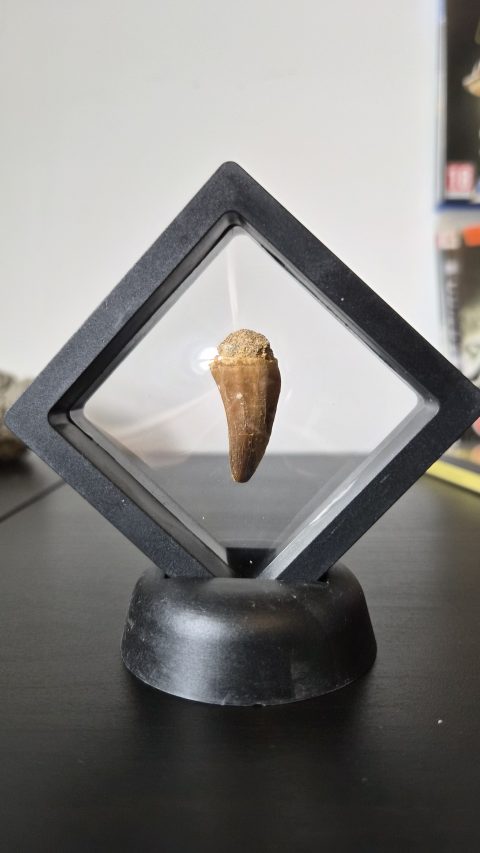
Giganotosaurus was a massive carcharodontosaurid theropod dinosaur that lived during the Late Cretaceous Period, approximately 99.6–97 million years ago. It was discovered in Patagonia, Argentina, where its fossils were found in the Candeleros Formation.
Giganotosaurus was one of the largest land predators in Earth's history, rivaling Tyrannosaurus rex in size. It had a long, narrow skull filled with blade-like, serrated teeth designed for slicing through flesh rather than crushing bones. Its powerful jaws and large body made it an apex predator of its ecosystem.
It reached an estimated length of around 12–13 meters (39–43 feet) and may have weighed between 6–8 tonnes. Unlike tyrannosaurs, Giganotosaurus had long, three-fingered arms and a lighter, more slender skull adapted for rapid attacks.
It likely hunted large sauropod dinosaurs such as Argentinosaurus, possibly attacking young or weakened individuals. Some scientists have suggested that carcharodontosaurids may have hunted cooperatively, although direct evidence for Giganotosaurus pack hunting is limited.
Giganotosaurus lived in South America during a time when giant sauropods and large predators dominated the continent, making it one of the most important predators in Cretaceous ecosystems.
Giganotosaurus
Giganotosaurus was one of the largest carnivorous dinosaurs ever discovered, a giant carcharodontosaurid predator from the Late Cretaceous of South America.