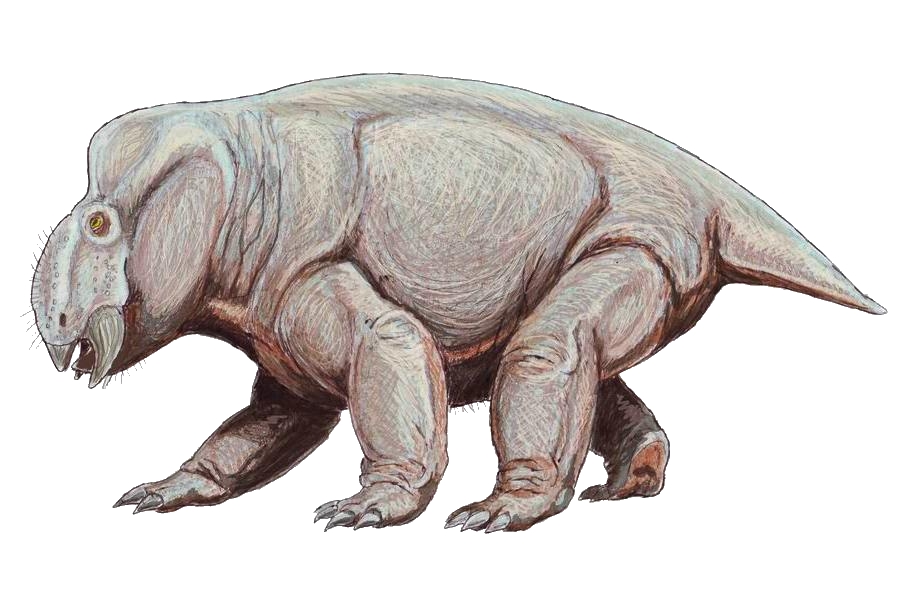
Placerias was a large herbivorous dicynodont synapsid that lived during the Late Triassic Period, approximately 221–210 million years ago. Although it was not a true dinosaur, it was a close relative of mammals and belonged to the group Therapsida, which includes the ancestors of modern mammals.
Placerias had a massive, barrel-shaped body, short legs, and a large skull equipped with a strong beak-like mouth. It had two prominent tusks extending from its upper jaw, which were likely used for defense, digging, or interactions between individuals. Unlike many predators of its time, Placerias was a plant-eater that likely fed on tough vegetation such as ferns and cycads.
Growing up to around 3.5 meters (11.5 feet) long and weighing several hundred kilograms, Placerias was one of the largest herbivores of the Late Triassic. Its strong build and herd-like behavior may have helped it survive alongside early dinosaurs and large predators.
Fossils of Placerias are mainly known from North America, especially the Chinle Formation of Arizona, where many individuals have been discovered together. These finds suggest that Placerias may have lived in groups, similar to modern large herbivorous mammals.
Placerias
Placerias was a large, herbivorous dicynodont synapsid from the Late Triassic known for its bulky body, tusks, and powerful beak-like jaws.