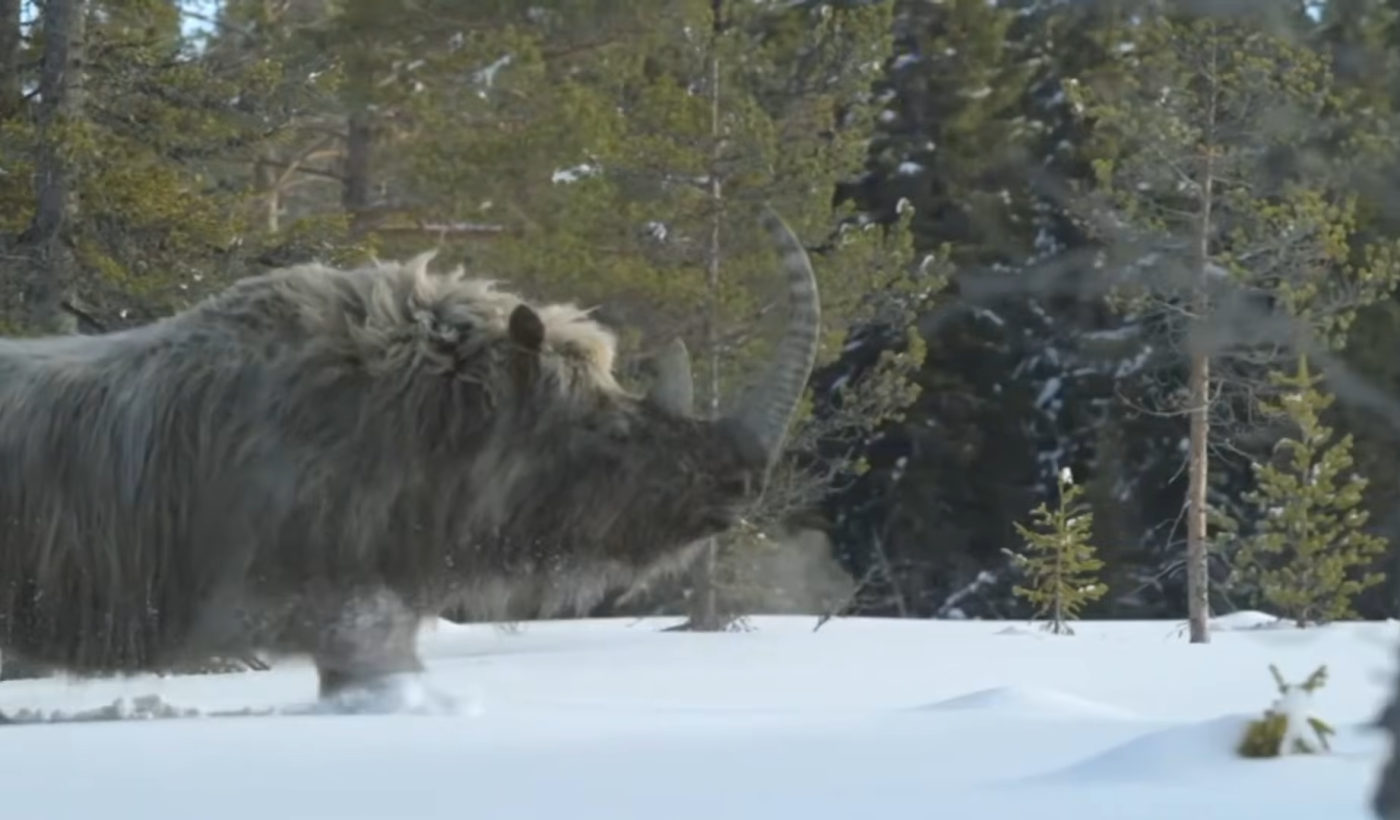
The Woolly Rhinoceros (Coelodonta antiquitatis) was a large prehistoric rhinoceros species that lived during the Pleistocene Epoch, approximately 500,000–14,000 years ago. It inhabited the cold grasslands and tundra regions of Europe and northern Asia, where it was one of the dominant herbivores of the Ice Age.
Woolly Rhinoceroses were highly adapted to freezing climates. They had a thick coat of long fur, a layer of fat beneath their skin, and a large hump on their shoulders that stored energy and supported powerful neck muscles. Their broad, flat lips were adapted for grazing on grasses and other vegetation found across the Mammoth Steppe.
They possessed two large horns made of keratin, with the front horn being especially long and curved. These horns may have been used for defense, fighting rivals, and clearing snow from vegetation to access food during harsh winters.
Adult Woolly Rhinos reached around 3–4 meters (10–13 feet) in length, stood about 1.8–2 meters (6–6.5 feet) tall at the shoulder, and could weigh between 1.8–3 tonnes. They lived alongside other Ice Age giants such as Woolly Mammoths, Megaloceros, and Cave Lions.
The species became extinct near the end of the Pleistocene, likely due to a combination of rapid climate change and human hunting pressure. Some frozen remains from Siberia have preserved fur, skin, and soft tissues, providing valuable information about this extinct animal.
Woolly Rhinoceros
The Woolly Rhinoceros was a large Ice Age mammal adapted to cold environments, known for its thick fur, massive horns, and survival in the Mammoth Steppe