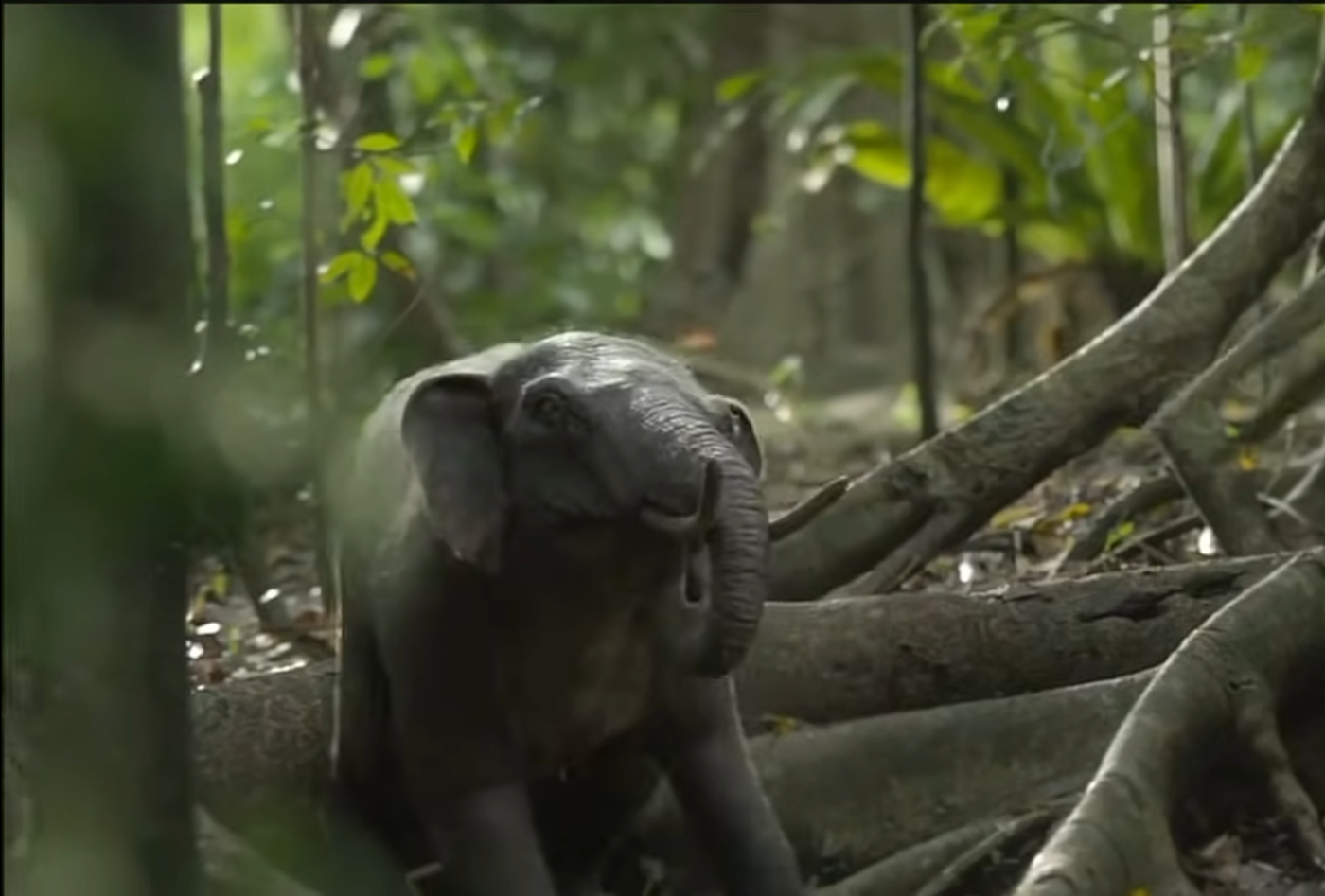
Stegodon was an extinct genus of large elephant-like mammals that lived from approximately 11 million to 4,000 years ago. It belonged to the family Elephantidae, making it a close relative of modern elephants and mammoths. Stegodon was one of the most successful prehistoric proboscideans, inhabiting much of Asia for millions of years before eventually becoming extinct.
Depending on the species, adults ranged from 3 to over 4 meters (10–13 feet) tall at the shoulder and could weigh between 4 and 10 metric tons. One of its most distinctive features was its pair of exceptionally long, nearly straight tusks, which in some species exceeded 3 meters (10 feet) in length. Unlike mammoths, whose tusks were strongly curved, Stegodon's tusks projected mostly forward with only a gentle curve.
Stegodon had a long trunk, sturdy pillar-like legs, and broad molars with low ridges adapted for browsing. Its teeth were better suited for eating leaves, branches, shrubs, and soft vegetation than for grazing on grasses. As forests spread across much of Asia during its existence, Stegodon became well adapted to woodland habitats.
The genus was widely distributed across China, India, Japan, Indonesia, Southeast Asia, and parts of the Indonesian islands. During periods of lower sea levels, land bridges allowed Stegodon to spread across many islands. On isolated islands such as Flores, some species evolved into much smaller forms through a process known as island dwarfism, while mainland species remained enormous.
Stegodon lived alongside a variety of prehistoric animals, including giant deer, rhinoceroses, saber-toothed cats, early humans, and later mammoths in some regions. Fossil evidence indicates that prehistoric humans hunted or scavenged Stegodon, and its remains have been discovered at archaeological sites associated with Homo erectus and Homo floresiensis, the famous "Hobbit" humans of Flores.
The first Stegodon fossils were described during the 19th century, and numerous species have since been identified from fossil sites across Asia. These discoveries have greatly improved scientists' understanding of elephant evolution and the effects of changing climates and island environments on large mammals.
Most Stegodon species disappeared as climates changed during the Ice Ages and forests declined. Human hunting may also have contributed to the extinction of the last surviving populations. By approximately 4,000 years ago, the genus had completely disappeared, marking the end of one of Asia's longest-lived elephant lineages.
Stegodon
An extinct elephant relative with long, nearly straight tusks that lived across Asia during the Neogene and Quaternary periods.