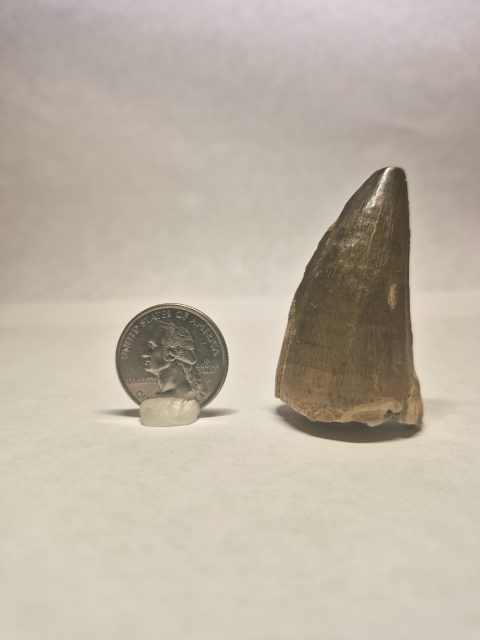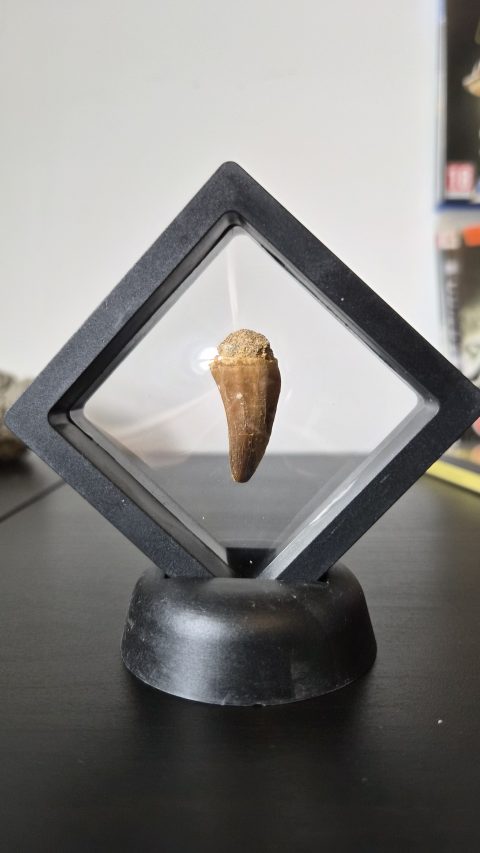
Ankylosaurus was a large herbivorous dinosaur that lived during the Late Cretaceous, approximately 68 to 66 million years ago. It belonged to the family Ankylosauridae, a group of heavily armored dinosaurs renowned for their extensive body armor and massive tail clubs. Ankylosaurus is one of the most recognizable armored dinosaurs and represents the largest known member of its family.
Adults reached lengths of up to 8 meters (26 feet) and weighed between 6 and 8 metric tons. Its broad, low-slung body was covered with thick bony plates called osteoderms, embedded within the skin to provide protection from predators. Smaller spikes and armored scales covered much of its body, while its skull was reinforced with fused bones, creating a natural helmet.
The most distinctive feature of Ankylosaurus was its large tail club, formed by enlarged bony knobs at the end of a stiffened tail. This powerful weapon could be swung with tremendous force and was likely used to defend against predators such as Tyrannosaurus rex, potentially breaking bones with a well-placed strike.
Ankylosaurus inhabited forests, floodplains, and coastal plains across what is now western North America. As a herbivore, it fed on low-growing vegetation, including ferns, cycads, shrubs, and flowering plants. Its broad beak allowed it to crop vegetation close to the ground, while its small, leaf-shaped teeth were adapted for chewing tough plant material.
Although its armor made it one of the best-defended dinosaurs, Ankylosaurus was not built for speed. Instead, it relied on its protective armor, low center of gravity, and formidable tail club to deter predators. Its nostrils and nasal passages were unusually complex, possibly helping regulate body temperature or enhancing its sense of smell.
The first Ankylosaurus fossils were discovered in 1906 in Montana, United States, and the dinosaur was formally named by paleontologist Barnum Brown in 1908. Since then, numerous fossil discoveries have helped scientists reconstruct its anatomy, behavior, and defensive adaptations.
Ankylosaurus became extinct approximately 66 million years ago during the Cretaceous–Paleogene (K–Pg) mass extinction, the same event that eliminated all non-avian dinosaurs. Today, it remains one of the best-known armored dinosaurs and serves as an outstanding example of the defensive adaptations that evolved during the Age of Dinosaurs.
Ankylosaurus
A heavily armored herbivorous dinosaur with a powerful tail club that lived in North America during the Late Cretaceous.