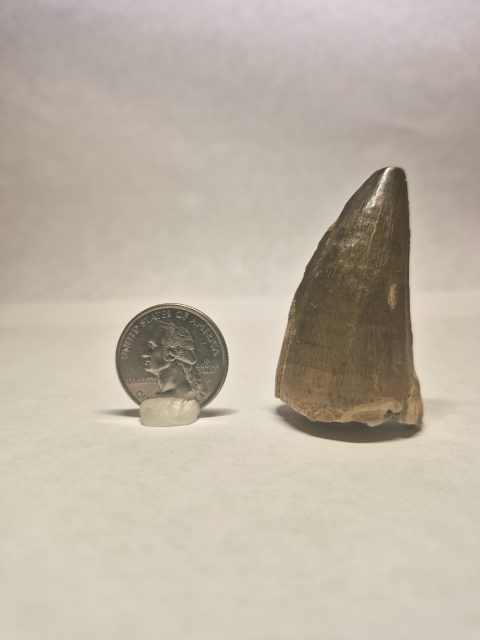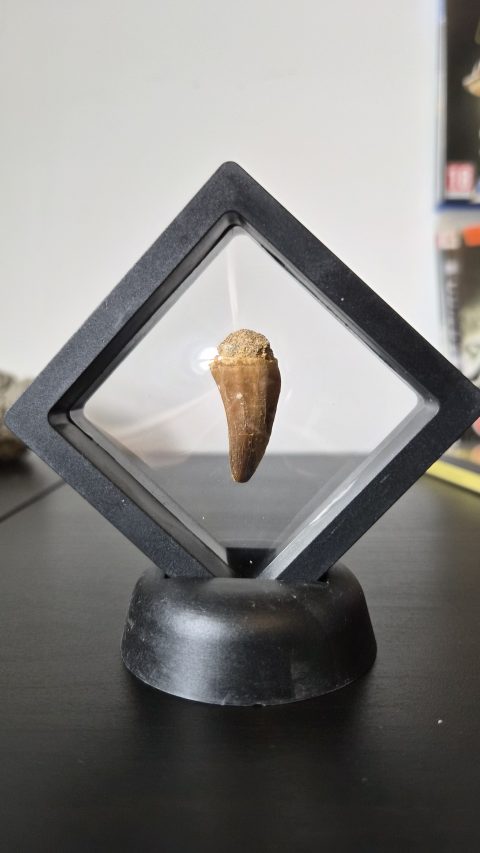
Argentinosaurus was a massive titanosaur sauropod dinosaur that lived during the Late Cretaceous Period, approximately 96–92 million years ago. It was discovered in Argentina, where its fossils were found in the Huincul Formation of Patagonia.
Argentinosaurus was among the largest dinosaurs ever discovered, with estimates suggesting it may have reached lengths of 30–35 meters (98–115 feet) and weighed between 50–100 tonnes or more. Like other sauropods, it had a long neck, a long tail, a small head, and a massive barrel-shaped body supported by four pillar-like legs.
As a herbivore, Argentinosaurus likely fed on large amounts of vegetation, using its long neck to reach high branches and cover wide areas while feeding. Its enormous size would have provided protection from most predators, although it lived alongside large theropods such as Mapusaurus, which may have hunted in groups.
Only a limited amount of Argentinosaurus fossils have been discovered, including vertebrae, limb bones, and parts of the pelvis. Despite the incomplete remains, it remains one of the most famous examples of extreme dinosaur gigantism and represents the incredible size that sauropods achieved during the Cretaceous.
Argentinosaurus
Argentinosaurus was a gigantic titanosaur sauropod dinosaur from the Late Cretaceous, considered one of the largest land animals ever to exist.