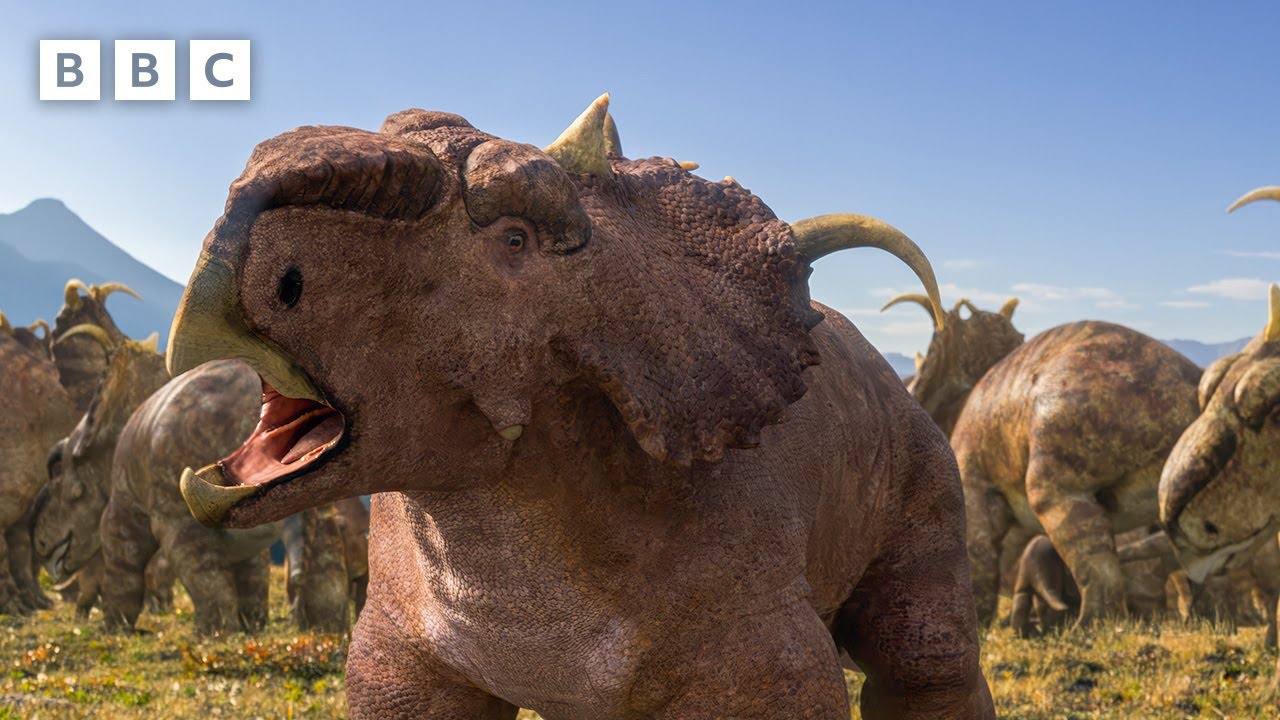
Pachyrhinosaurus was a large herbivorous dinosaur that lived during the Late Cretaceous, approximately 72 to 67 million years ago. It belonged to the family Ceratopsidae, the same group of horned dinosaurs as Triceratops, but differed in having a thick, flattened nasal boss rather than a prominent nose horn. This unique feature makes Pachyrhinosaurus one of the most recognizable members of the ceratopsian dinosaurs.
Adults reached lengths of up to 8 meters (26 feet) and weighed between 3 and 4 metric tons. Like other ceratopsians, Pachyrhinosaurus had a large bony frill extending from the back of its skull, decorated with spikes and knobs that varied between species and individuals. Above each eye were small horns, while the large nasal boss may have been covered by a thick layer of keratin in life, making it an effective structure for display, defense, or head-to-head combat with rivals.
Pachyrhinosaurus lived in what is now Alberta (Canada) and Alaska (United States), inhabiting floodplains, forests, and coastal environments near the northern shores of the ancient Western Interior Seaway. During the Late Cretaceous, these regions experienced a warmer climate than today, supporting lush vegetation that provided abundant food for large herbivores.
As a herbivore, Pachyrhinosaurus fed on ferns, cycads, conifers, shrubs, and flowering plants. Its strong beak and powerful jaws contained closely packed teeth arranged in dental batteries, allowing it to efficiently slice and grind tough vegetation.
Evidence from bonebeds containing numerous individuals suggests that Pachyrhinosaurus may have lived in herds. Living in groups would have provided protection from large predators such as Albertosaurus and other tyrannosaurids that shared its environment.
The first Pachyrhinosaurus fossils were discovered in Alberta, Canada, in 1946, and several species have since been described. Fossil discoveries in both Canada and Alaska have revealed important information about dinosaur life in high-latitude environments, where these animals experienced long periods of summer daylight and winter darkness.
Pachyrhinosaurus became extinct approximately 66 million years ago during the Cretaceous–Paleogene (K–Pg) mass extinction, the same event that eliminated all non-avian dinosaurs. Today, it is considered one of the most distinctive horned dinosaurs and provides valuable insight into the evolution and diversity of ceratopsians.
Pachyrhinosaurus
A large herbivorous horned dinosaur distinguished by its massive bony nasal boss instead of a long nose horn, living in North America during the Late Cretaceous.