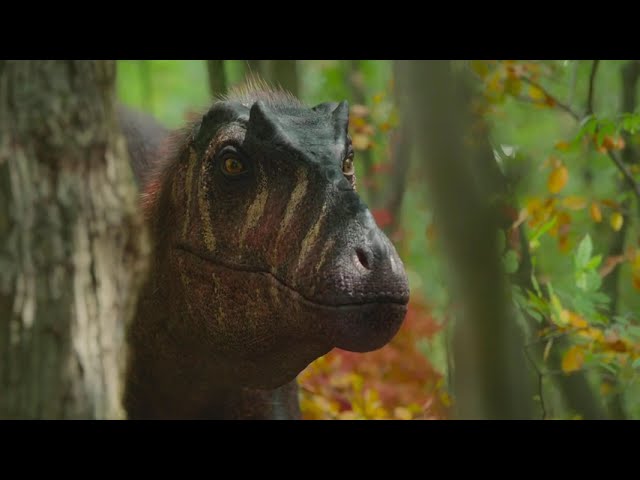
Qianzhousaurus was a medium-sized carnivorous dinosaur that lived during the Late Cretaceous, approximately 72 to 66 million years ago. It belonged to the family Tyrannosauridae, making it a close relative of Tyrannosaurus rex. Unlike its more famous cousin, however, Qianzhousaurus had a remarkably long, narrow snout, earning it the popular nickname "Pinocchio Rex."
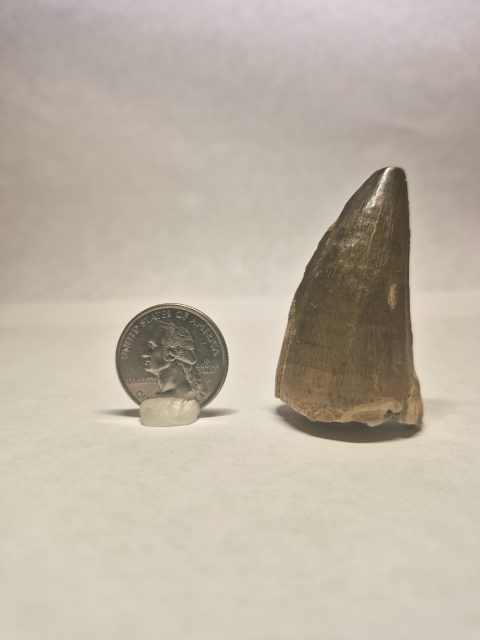
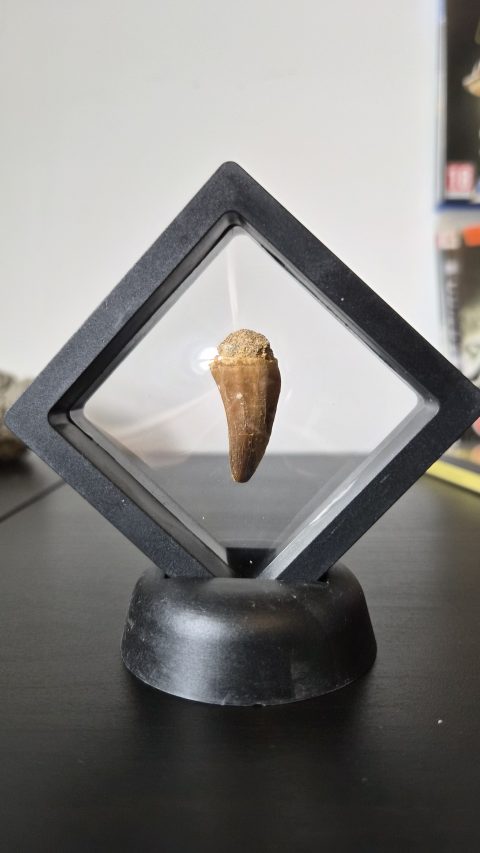
Adults measured around 8 to 9 meters (26–30 feet) in length and are estimated to have weighed between 750 and 1,500 kilograms (1,650–3,300 pounds). Although considerably lighter than Tyrannosaurus rex, Qianzhousaurus was still a formidable predator. Its elongated skull was lined with numerous sharp, serrated teeth, suggesting it was adapted to capturing smaller, faster prey rather than relying on the immense bone-crushing bite of larger tyrannosaurids.
Qianzhousaurus belonged to a specialized group of tyrannosaurs known as Alioramini, which also includes Alioramus. Members of this group are distinguished by their slender builds, long legs, elongated skulls, and relatively lightweight bodies. These adaptations likely allowed them to pursue agile prey through forests and floodplains, occupying a different ecological niche from larger tyrannosaurs.
The dinosaur inhabited what is now southern China, where warm, subtropical environments supported a rich diversity of plants and animals during the Late Cretaceous. It shared its habitat with other dinosaurs, crocodilians, turtles, and early birds, contributing to a complex ecosystem of predators and herbivores.
The first Qianzhousaurus fossils were discovered near the city of Ganzhou in Jiangxi Province, China, during construction work. The species was formally described in 2014 and named Qianzhousaurus sinensis. The discovery was particularly significant because the fossil preserved a nearly complete skull, allowing scientists to identify its unusual anatomy and recognize it as a distinct branch of the tyrannosaur family tree.
Qianzhousaurus became extinct approximately 66 million years ago during the Cretaceous–Paleogene (K–Pg) mass extinction, the same event that eliminated all non-avian dinosaurs. Today, it provides important evidence that tyrannosaurs were far more diverse than once believed, with different species evolving specialized body shapes and hunting strategies.
Qianzhousaurus
A long-snouted tyrannosaurid from the Late Cretaceous of China, nicknamed "Pinocchio Rex" for its unusually elongated skull.