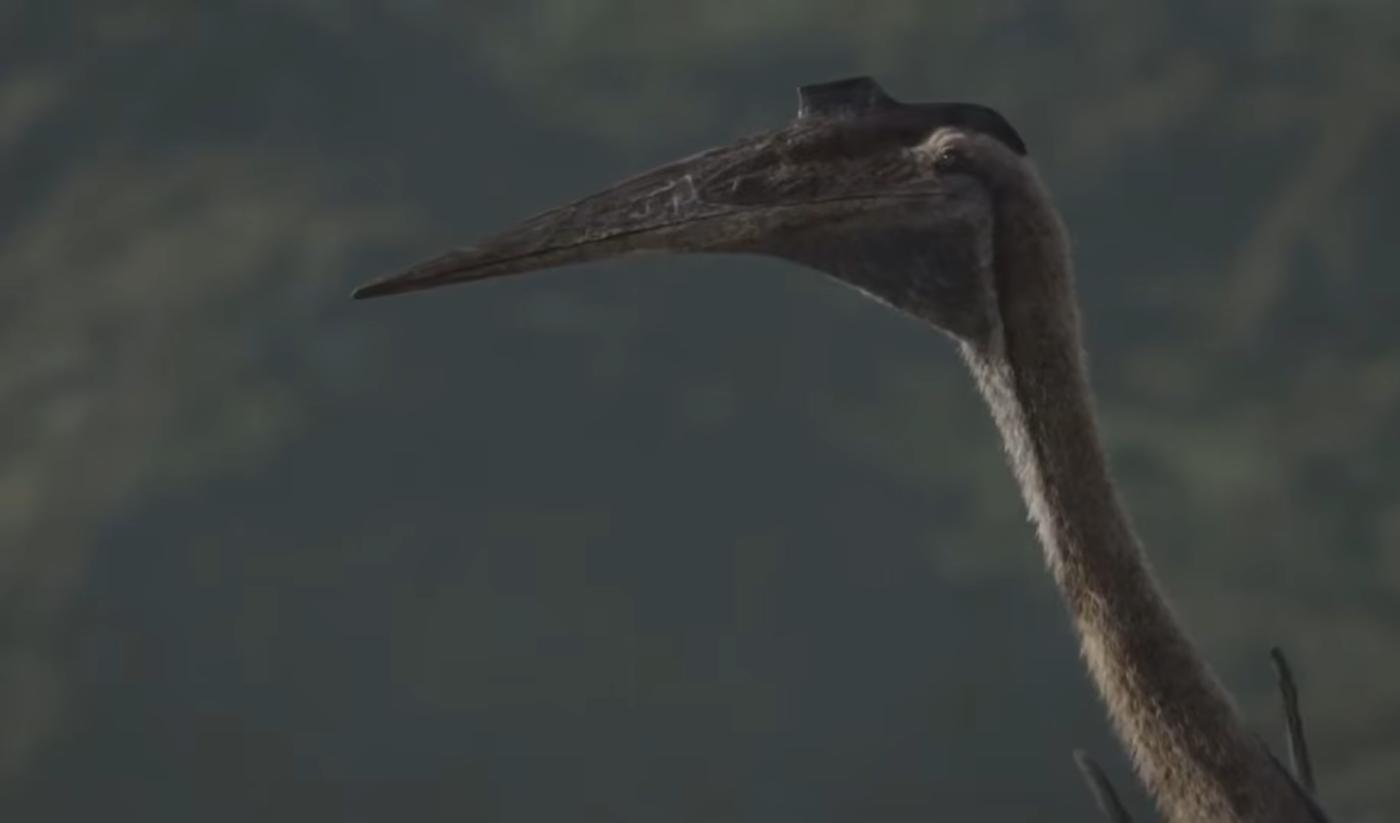
Quetzalcoatlus was a giant azhdarchid pterosaur that lived during the Late Cretaceous Period, approximately 68–66 million years ago. It was discovered in Texas, United States, within the Javelina Formation, and is considered one of the largest flying animals known from Earth's history.
Despite often being called a "flying dinosaur," Quetzalcoatlus was not a dinosaur but a close flying reptile relative that lived alongside dinosaurs. It had an extremely long neck, a large pointed beak, and enormous wings supported by a single elongated finger.
Its wingspan is estimated to have reached around 10–11 meters (33–36 feet), with some estimates suggesting even larger sizes. When standing on the ground, it may have reached a height of around 5 meters (16 feet), making it taller than many modern giraffes.
Quetzalcoatlus likely used its long legs and powerful wings to launch itself into flight. Its feeding habits are debated, but scientists suggest it may have been an opportunistic predator or scavenger, eating small animals, carrion, and possibly fish.
Like other azhdarchids, Quetzalcoatlus was likely a skilled glider that used rising air currents to travel long distances. It lived during the final millions of years of the Cretaceous, shortly before the asteroid impact that caused the extinction of non-avian dinosaurs.
Quetzalcoatlus
Quetzalcoatlus was a gigantic flying pterosaur from the Late Cretaceous known as one of the largest flying animals ever to exist.