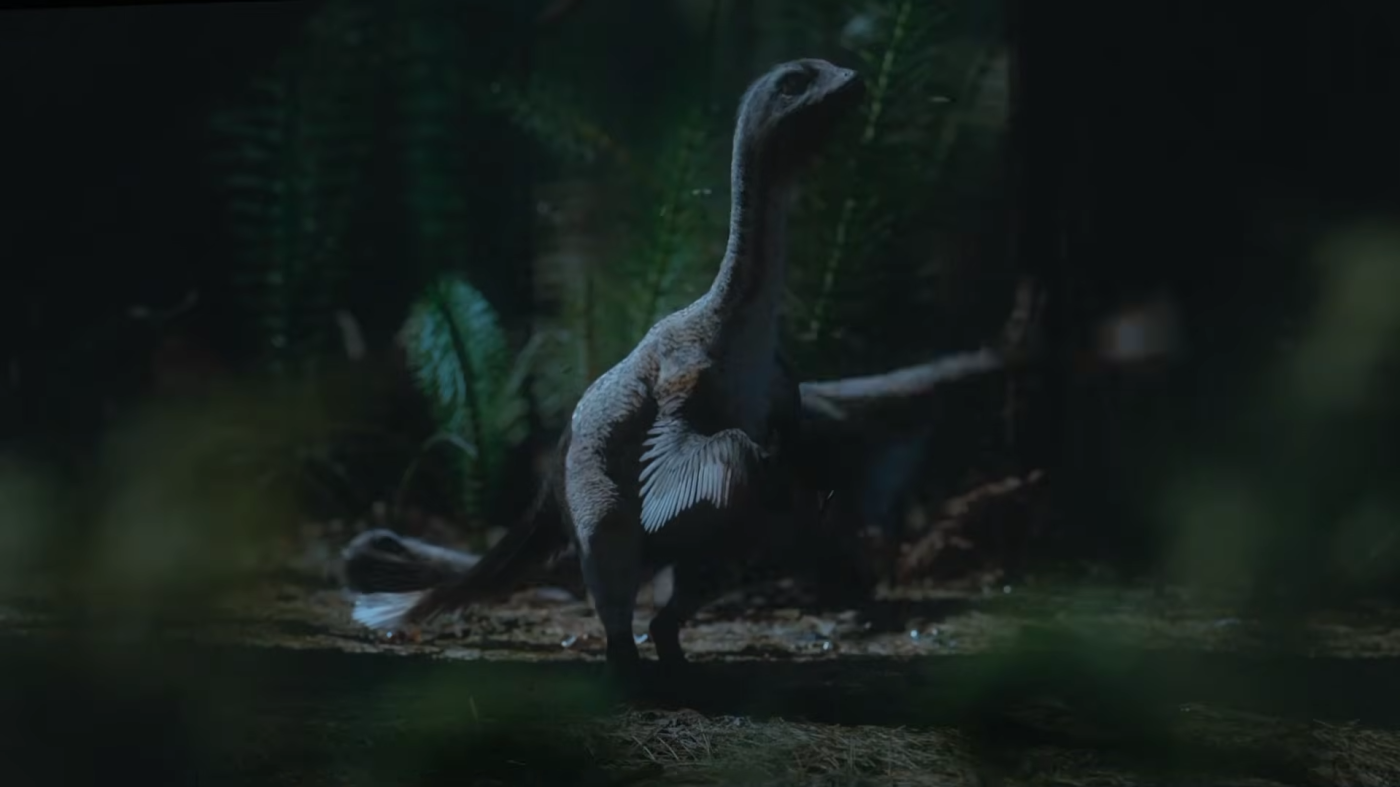
Therizinosaurus was a large therizinosaur theropod dinosaur that lived during the Late Cretaceous Period, approximately 70–66 million years ago. It was discovered in the Nemegt Formation of Mongolia, where it lived alongside many other famous dinosaurs.
Unlike most theropods, which were meat-eaters, Therizinosaurus was likely a herbivore or omnivore. It had a small head with a toothless beak, a long neck, and a large, bulky body adapted for feeding on plants. Its diet probably included leaves, branches, and other vegetation.
Its most famous feature was its enormous hand claws, which were among the longest known of any animal, reaching lengths of over 50 centimeters (20 inches). These claws may have been used for pulling vegetation closer, defense against predators, or competition between individuals.
Therizinosaurus was one of the largest members of its group, reaching an estimated length of around 9–10 meters (30–33 feet) and weighing several tonnes. Like other maniraptoran dinosaurs, it was likely covered in feathers, showing its close evolutionary relationship to birds.
It lived alongside predators such as Tarbosaurus and armored dinosaurs such as Tarchia, making it one of the most unusual dinosaurs in its ecosystem.
Therizinosaurus
Therizinosaurus was a gigantic feathered theropod dinosaur from the Late Cretaceous known for its enormous claws, long neck, and unusual herbivorous lifestyle.