Tyrannosaurus rex, often abbreviated as T. rex, was one of the largest and most iconic carnivorous dinosaurs to have ever lived. It roamed western North America during the Late Cretaceous, approximately 68 to 66 million years ago, just before the Cretaceous–Paleogene (K–Pg) mass extinction that brought the age of the non-avian dinosaurs to an end.
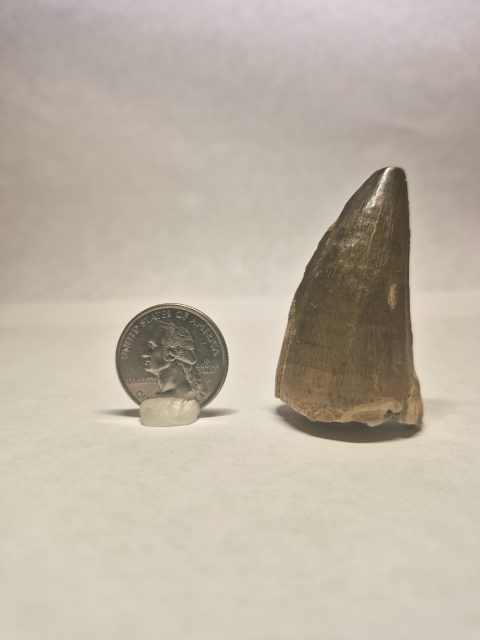
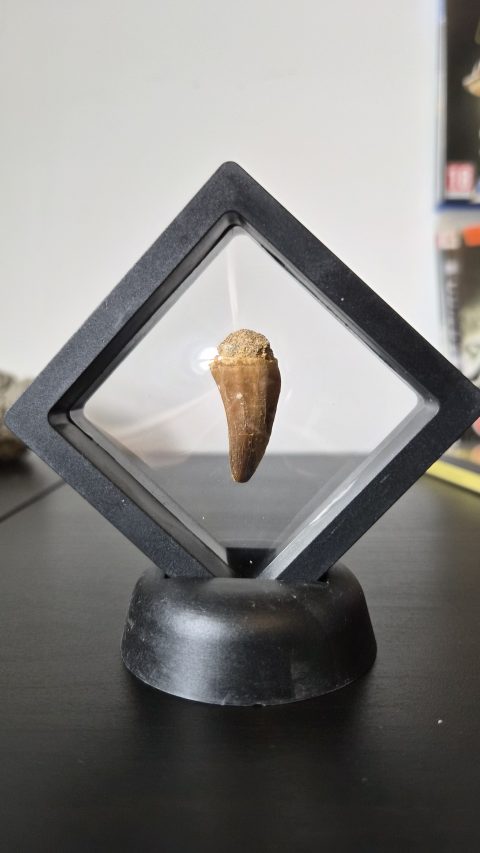
Adult Tyrannosaurus rex measured up to 12.5–13 meters (41–43 feet) in length, stood around 4 meters (13 feet) tall at the hips, and weighed between 8 and 10 metric tons. It possessed a massive skull equipped with around 60 thick, serrated teeth, some measuring over 30 centimeters (12 inches) long including the root. Rather than slicing flesh, its teeth were designed to crush bone, giving T. rex one of the strongest bite forces of any known terrestrial animal.
Although its arms were relatively small, they were heavily muscled and ended in two powerful claws. Its long, muscular tail acted as a counterbalance for its enormous head, allowing it to move efficiently on its strong hind legs. Modern research suggests that Tyrannosaurus rex was capable of walking at moderate speeds and relied on its immense strength, keen senses, and powerful jaws to hunt or scavenge prey.
Tyrannosaurus rex inhabited forests, floodplains, and river valleys across what is now western North America. As the apex predator of its ecosystem, it preyed upon large herbivorous dinosaurs such as Triceratops and Edmontosaurus, though it likely also scavenged carcasses when opportunities arose. Fossil evidence, including healed bite marks and tooth impressions, provides direct evidence of interactions between T. rex and its prey.
The first partial skeleton of Tyrannosaurus rex was discovered in 1902 by American fossil hunter Barnum Brown, and the species was formally named in 1905 by paleontologist Henry Fairfield Osborn. Since then, dozens of specimens have been uncovered, including remarkably complete skeletons such as "Sue" and "Scotty," which have greatly expanded scientific understanding of the species.
Tyrannosaurus rex became extinct approximately 66 million years ago during the Cretaceous–Paleogene (K–Pg) mass extinction, the same event that eliminated all non-avian dinosaurs, ammonites, and many other forms of life. Today, it remains one of the best-studied and most recognizable dinosaurs, serving as a symbol of prehistoric life and one of the greatest terrestrial predators ever to exist.
Tyrannosaurus Rex
A giant carnivorous dinosaur that dominated North America during the Late Cretaceous and is regarded as one of the largest and most powerful land predators in Earth's history.